More content isn't the answer in 2026. Better content, distributed strategically across SEO, social and email, is how a full-service marketing agency wins.
How much content should a business create?
Enough to cover the questions your buyers ask and to stay present between purchase decisions - and no more than you can sustain at a quality that reflects the brand. For most mid-sized businesses that means two to four substantial pieces per month (article, video or campaign asset) plus the derivative assets produced from them.
Volume without a system produces waste. One properly planned production day can yield an article, several short videos, a photo library, email content and weeks of social posts, which is nearly always a better use of budget than publishing daily from scratch.
The content marketing industry has a volume problem. For years, businesses have been told to post more, publish more and create more - and the result is a sea of mediocre content that no one reads, watches or remembers. In 2026, the brands winning with content are not the ones posting every single day. They're the ones producing intentional, high-quality content that serves a specific strategic purpose for a specific audience on a specific channel.
Strategy first, content second Every effective content program starts with three questions: Who are we trying to reach? What do they care about? Where do they already spend time? The answers determine the formats (video, photo, written, audio), the platforms (Google, Instagram, LinkedIn, YouTube, email) and the cadence. A full-service marketing agency builds that strategy first, then produces against it - instead of producing content and hoping it lands.
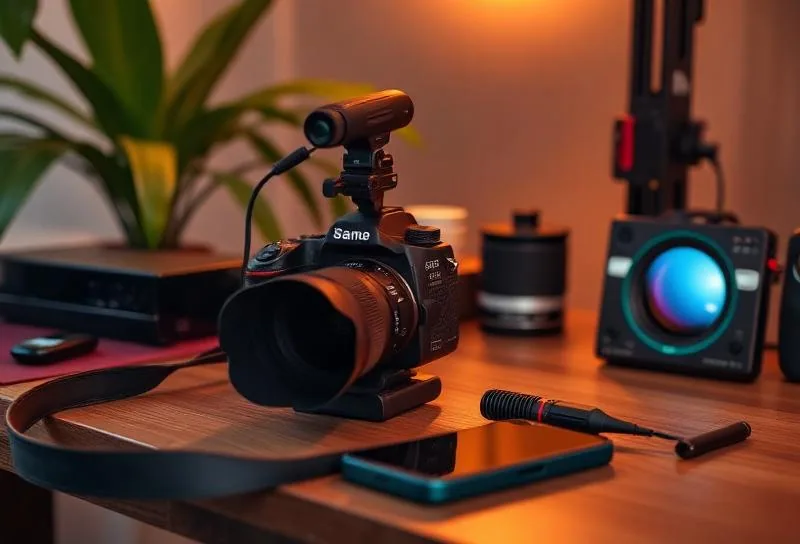
The "create once, distribute everywhere" model The most efficient content programs in 2026 follow a "create once, distribute everywhere" model. A single in-depth video shoot becomes: - A long-form YouTube video optimised for search. - A blog post built around the same keyword cluster. - A series of short-form clips for Instagram, TikTok and LinkedIn. - An email newsletter with the key takeaways. - A set of organic social posts and paid ad creatives. - A podcast cut for audio platforms.
That's six channels of content fed by one production day - and every asset reinforces the same brand story.
SEO content is still the highest-ROI content Social moves fast, but SEO content compounds. A well-built blog post or service page can keep generating qualified organic traffic for years. In 2026, Google's algorithms reward content that demonstrates genuine expertise, original insight and clear structure. That means longer, more substantive articles built around real keyword research - not 400-word fluff pieces written to fill a calendar.
Video is no longer optional Whether it's short-form social video, long-form YouTube content or branded reels, video is now the format buyers expect. Businesses that aren't producing consistent video content in 2026 are quietly losing share of voice. The good news: with the right systems, video doesn't have to be expensive. A full-service marketing agency can run quarterly content shoots that produce months of social, ad and SEO content from a single production day.
Content for businesses in the USA and Canada For businesses across the United States and Canada, locally-relevant content is one of the strongest organic growth channels available. City-specific articles, neighbourhood guides, industry-specific case studies and locally-shot video content all signal to Google - and to buyers - that you actually serve the markets you claim to. That kind of content is what turns a generic website into a genuine local authority.
The bottom line Content without strategy is just noise. Content with strategy is a growth engine. In 2026, the businesses winning with content are the ones working with a full-service marketing agency that owns the entire pipeline - strategy, production, distribution, SEO, social and reporting - and treats every asset as part of one cohesive system.
What is a content strategy?
A written plan defining audience, topics, formats, channels, production cadence and measurement. It answers what you publish, why, and how it supports the sale.
Content strategy vs. content creation - what's the difference?
Strategy decides what to make and why. Creation produces it. Businesses usually have creation capacity and no strategy, which is why output feels busy but performs poorly.
What types of content perform best?
Content tied to buyer decisions: pricing explanations, comparisons, process walkthroughs, case studies and answers to specific technical questions. Short vertical video performs best for reach; written pages perform best for search and AI citation.
How does content help SEO?
Content is how a site earns coverage of a topic. Search engines and AI assistants both reward sites that answer the full set of related questions clearly and consistently.
Should businesses outsource content creation?
Outsource production and editing. Keep subject-matter input internal - the expertise that makes content worth reading cannot be outsourced credibly.
How New Wave Marketing approaches this
New Wave Marketing plans content in quarterly themes and produce in sprints. A shoot day covers several topics at once, which reduces cost per asset dramatically and keeps the calendar full during busy operational periods.
The other thing New Wave Marketing insists on is refresh over replace. Updating an existing page that already has impressions is usually faster to rank than a new article on the same subject.
How to build a monthly content plan
- Pick one theme tied to a service you want to sell
- List the ten questions buyers ask about it
- Choose two to four that have real search demand
- Assign a primary format to each (article, video, guide)
- Book a single production day for all of them
- Plan derivatives: reels, carousels, email, sales collateral
- Set internal links to the relevant service and case study
- Review performance at 60 and 120 days, then refresh
Frequently asked questions
How do you measure content performance?
New Wave Marketing measures organic impressions and clicks per piece, assisted conversions, time on page for long-form, and whether sales teams actually use it.
How is AI changing content creation?
AI accelerates research, outlining, editing and repurposing. It does not supply first-hand experience, which is exactly what search engines and AI assistants now reward.
How much does content creation cost?
Production days commonly run $2,500-$7,500 depending on crew and deliverables; ongoing content retainers typically start around $2,000 per month.
How long should articles be?
Long enough to answer the question completely. Focused questions often need 800-1,400 words; competitive commercial topics usually need more.